
Google Play Developer Account Terminated: What It Means, How the Appeal Works, and What to Do Next
 Grace WhitmorePublished on September 4, 2026 · in Guides
Google Play Developer Account Terminated: What It Means, How the Appeal Works, and What to Do Next
An app being rejected is a setback. An app being removed is a bigger one. A developer account termination is a different category altogether: it ends your ability to distribute anything through Google Play under that identity, and it follows you to any new account it can be linked to.
This guide separates the three outcomes people routinely confuse, walks through what actually happens at termination, explains how the appeal works and what tends to matter in one, and covers the distribution question that has to be answered whether or not the appeal succeeds.
Three different outcomes, three different problems
These get used interchangeably, and they are not the same thing:
App rejected. A submission did not pass review. Nothing that was already live is affected. You read the reason, fix it, and resubmit. How to read a rejection reason and fix it covers that path.
App removed or suspended. A published app is pulled from the store. Existing installs generally keep working, but new installs stop and updates cannot ship. The account survives. What happens after an app is removed covers reinstatement.
Developer account terminated. The account itself is closed. Every app under it comes down at once, the console access ends, and the identity is barred from future distribution. This is the one that ends a distribution channel rather than interrupting it.
Reading a termination notice as if it were an app suspension is the most common reason teams waste their first and most valuable days on the wrong response.
What happens at termination
Several things occur close together, and it is worth knowing the shape of them in advance rather than discovering each one in sequence:
- Every app under the account is taken down, including apps that were never the subject of a complaint.
- Console access is restricted, which affects your ability to export data, review historical performance, and in some cases retrieve information you would want for the appeal itself. Anything you need should be pulled early rather than later.
- Payments and remaining balance follow their own process and timeline, separate from the appeal.
- Existing installs on user devices are generally not deleted, but they stop receiving updates through the store. An installed base becomes frozen rather than erased.
- Related accounts become exposed. This is the part that surprises people most, and it deserves its own section.
The related-account rule
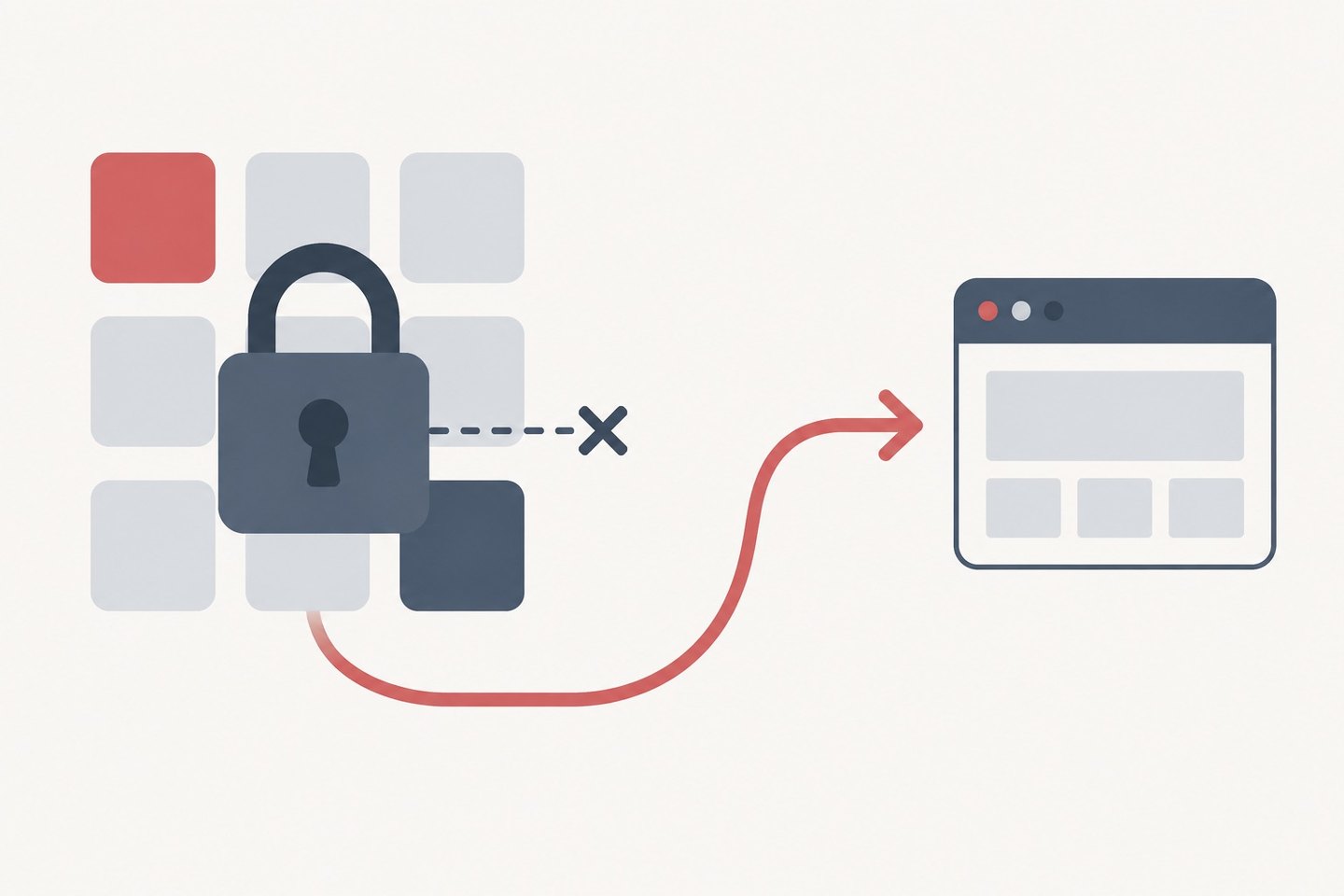
Google Play's terms allow termination of accounts determined to be associated with a terminated one. Association is inferred from signals across the account and its infrastructure rather than from a single field, and the practical consequence is straightforward: opening a fresh account to re-publish the same app frequently results in that account being terminated too, often quickly and sometimes without the same appeal path.
This matters for sequencing. A team that reflexively registers a new account on day one can turn a single termination into a pattern, which is materially harder to argue against later. Whatever the eventual plan is, the appeal on the original account is generally the cleaner first move.
It also matters for how you think about "distribution risk" in general. If everything you ship depends on one store identity, a single termination takes the whole channel down at once.
How the appeal works
There is a dedicated appeal form for account terminations, separate from app-level appeals. A few things about the process shape how you should approach it:
Treat it as one substantive attempt, not a conversation. Appeals are reviewed against the stated reason. Submitting a thin appeal and expecting to elaborate later is a poor use of the strongest opportunity you get.
Answer the reason that was actually given. Termination notices cite a policy basis. An appeal that argues general good intent, describes how much revenue is at stake, or explains how long the team has been publishing does not engage with that basis. An appeal that addresses the cited policy specifically — what the behavior was, whether it was intentional, what has been changed — does.
Be accurate about history. If there were prior enforcement actions, prior accounts, or a shared infrastructure story, an appeal that omits them is worse than one that explains them. Reviewers frequently have that context already.
Include verifiable specifics. Version numbers, dates, what changed and when, what code or SDK was responsible, what has been removed. Specifics can be checked; assurances cannot.
Do not restate the same appeal repeatedly. Repeated identical submissions do not add information.
What tends not to work: appeals built entirely on business impact, appeals that dispute the policy rather than the finding, and appeals that promise future compliance without identifying what actually happened.
Common bases for termination
Terminations generally trace back to a small number of categories. Knowing which one you are in changes what a credible appeal looks like:
- Repeated or unresolved policy violations across one or more apps, where earlier enforcement did not lead to a fix.
- Deceptive behavior, including functionality that differs from what the listing describes, or content shown to reviewers that differs from what users receive.
- Association with a previously terminated account, as described above.
- Metadata and listing manipulation, such as misleading titles, keyword stuffing, or fabricated reviews and installs.
- Sensitive-permission or data-handling issues, where declared use and actual behavior diverge.
- Payments policy issues, typically around processing that bypasses required billing for in-app digital purchases.
A useful internal exercise before writing the appeal: read the cited policy and answer honestly whether a reviewer looking at your app would reach the same conclusion. If the answer is yes, the appeal needs to be about what changed, not about why they were wrong.
Distribution while the appeal runs — and if it fails
Appeals take time and are not guaranteed. Teams that treat the appeal as their only track tend to lose weeks of distribution. The parallel question is: what is the path to users that does not depend on this store identity?
The realistic options each carry different trade-offs:
Other Android stores. Regional and OEM app stores reach real audiences, particularly outside the US and Europe, but each has its own review process, its own account, and its own billing arrangement. Coverage is fragmented.
Direct APK distribution. Full control, no store gatekeeper, and no store discovery either. Install friction is real, updates become your responsibility, and ad platforms differ in how they treat off-store destinations.
A web-installable experience. A progressive web app is installed from a URL rather than from a store listing, which means store enforcement is not part of the path at all. It is not equivalent to a native app — hardware access, background behavior, and platform integration are narrower, and iOS behaves differently from Android. But for products that are substantially a front end over a service, it removes a single point of failure. How PWA and APK distribution actually differ covers what changes, and PWA versus native in 2026 covers where the boundary sits today. If the question is how much work it is, converting an existing site into an installable app is the shortest version of the answer.
None of these is a way to circumvent enforcement, and treating them as one tends to recreate the original problem. They are ways to stop having a single store identity as your only route to users.
Reducing the odds of it happening again
- Separate identities for genuinely separate products, so one enforcement action does not take everything down. Do not confuse this with running duplicate accounts for the same app, which is the behavior the related-account rule targets.
- Resolve app-level enforcement properly rather than working around it. Most terminations have earlier, smaller warnings behind them.
- Keep listing claims and actual functionality aligned. The gap between them is the most common deceptive-behavior finding.
- Re-review permissions and SDKs on a schedule. Third-party SDKs change behavior in updates, and the declaration you filed last year may no longer describe what your app does.
- Keep an export of what you would need for an appeal — build history, policy correspondence, change logs — outside the console.
Frequently asked questions
Can a terminated account be restored? It can happen through the appeal process, but it is not the default outcome. Plan on the assumption that it may not, while still making the appeal as strong as possible.
How long does an appeal take? It varies and is not published as a guaranteed window. Treat it as indefinite for planning purposes.
Can I publish the same app under a new account? This is what the related-account rule addresses, and doing so commonly results in the new account being terminated as well. It also weakens any position you have on the original account.
Do users lose the app they already installed? Generally no, but they stop receiving updates through the store, and new users cannot install it.
Is the registration fee refunded? The registration fee is not a subscription and is not refunded on termination.
The short version
A developer account termination is not a larger version of an app removal — it removes an identity rather than a listing, and it extends to accounts that can be linked to it. The first days are best spent exporting what you will need, reading the cited policy honestly, and writing one substantive appeal that addresses the actual finding. Registering a replacement account is the move that most often makes things worse.
In parallel, answer the distribution question, because it needs an answer either way: if a single store identity going away can stop your entire product from reaching users, that is a structural exposure independent of whatever the appeal decides.