
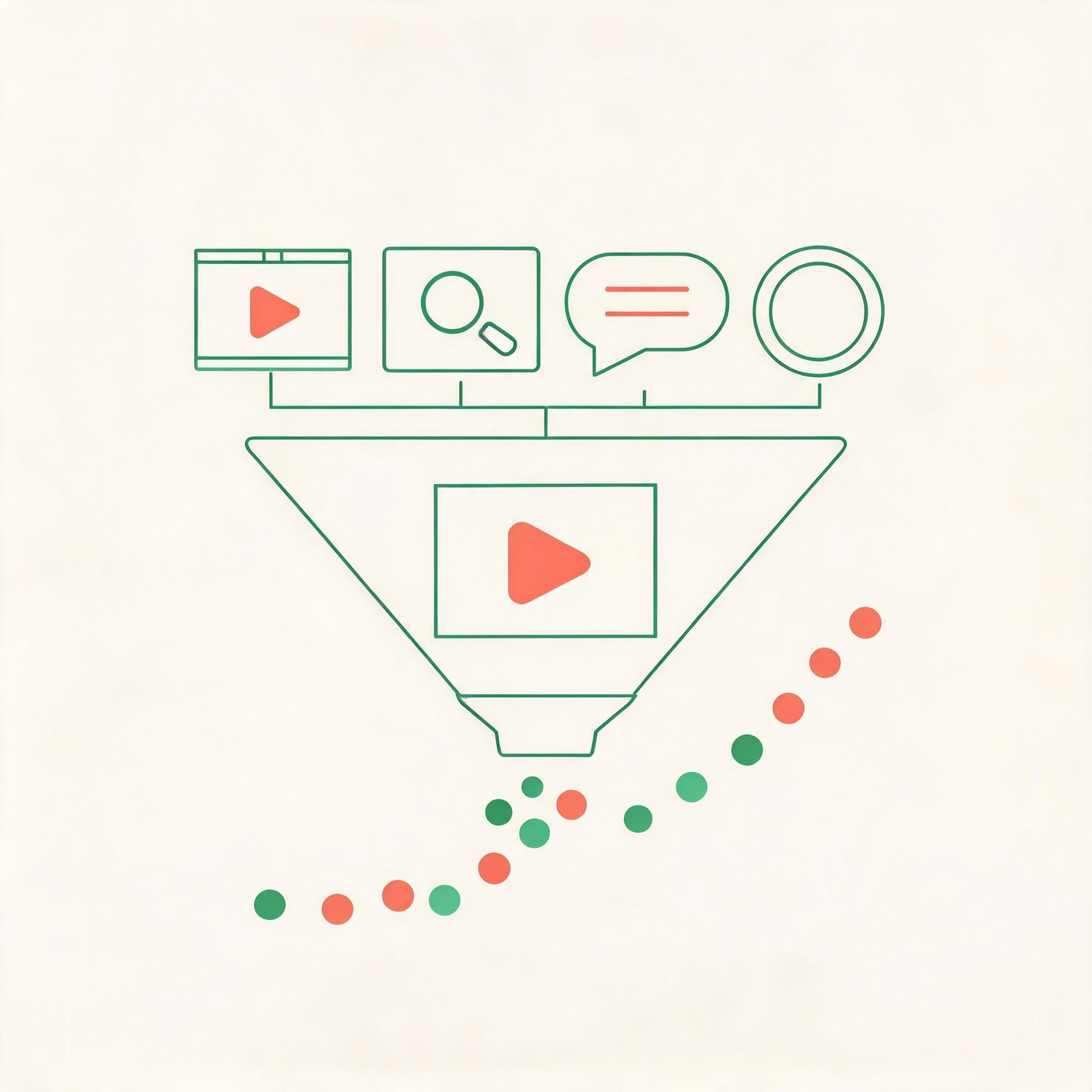
Micro Drama App Marketing: Channels, Creative and Retention That Actually Move Paying Viewers
 Ethan ColePublished on September 19, 2026 · in Guides
Micro Drama App Marketing: Channels, Creative and Retention That Actually Move Paying Viewers
Micro drama app marketing looks deceptively similar to game or utility app marketing: buy installs, measure cost per install, scale what works. Teams that run it that way usually end up with a cheap install curve and a flat revenue curve. The format has a specific shape — a viewer decides within two or three episodes whether to keep going, and almost all revenue comes from the small share who do — and the marketing has to be built around that shape rather than around the install event.
This guide covers what to optimize, where the audience actually is, how the creative engine works, and what to instrument so the second month's budget has something to act on.
Optimize for episode N, not for the install
The install is a leading indicator, not the goal. Three metrics tell you far more:
- Episode-3 continuation rate. What share of new viewers reach the third episode of their first series? This is the single cleanest read on whether your acquisition creative matched the content you actually have.
- First-purchase rate and time to first purchase. Micro drama monetization is typically front-loaded: a viewer who has not unlocked anything by their second session usually never will.
- Revenue per new viewer at day 7. Not per install, not per registered account — per viewer who watched at least one episode.
The reason this matters operationally: the same creative can win on cost per install and lose badly on all three. A dramatic hook clipped from your most extreme series will collect cheap installs from people who then find the rest of the catalogue doesn't match the promise. Teams that optimize a bid strategy toward install volume tend to select for exactly this creative.
If your monetization model is still being decided, the pricing and packaging side is covered separately in Short Drama App Monetization, and the sequencing of a first overseas release in How to Launch a Short Drama App Overseas.
Your catalogue is your ad library
The structural advantage of this category is that the product and the creative are the same material. A micro drama app with 40 series has thousands of candidate hooks already shot, already localized, already rights-cleared.
What works in practice:
- Cut from the cliffhanger, not from the setup. The highest-performing hooks are usually 6–15 seconds and land on an unresolved beat. The setup is what the viewer gets in the app.
- Vertical-native, subtitle-forward. Most viewing happens with sound off in the feed. Subtitles are not an accessibility afterthought here; they carry the hook.
- Rotate aggressively. Creative fatigue in feed-based channels is measured in days, not months. A sustainable cadence is a fresh batch weekly, sourced from series you are about to promote anyway.
- Match the hook to the landing experience. If the ad shows a specific scene, the first thing the viewer sees after install should be that series — not a generic catalogue home screen. Deep linking into the specific episode is the highest-leverage fix most teams haven't made.
One discipline worth enforcing: keep a small permanent control set of creatives that you never turn off. Without it, you cannot tell a genuine performance shift from normal creative churn.
Where the audience actually is
Channel mix varies by market, but four buckets cover most spend:
Short-video feed platforms. The natural home for the format — the audience is already in a vertical-video consumption mode, and the creative translates with no reformatting. Highest volume, fastest fatigue, most sensitive to hook quality.
Broad social and display. Useful for reach beyond the feed-native audience and for retargeting viewers who installed but never purchased. Creative needs more explicit framing here, because the viewer is not already in a watching mindset.
Search. Small volume relative to feeds, but qualified: people searching for a series title, a genre, or "app like X" are far down the intent curve. This is also where an owned content property compounds — a blog or catalogue site ranking for series names and genre queries keeps producing traffic after the campaign stops. It is slow, and it is the only channel on this list whose cost does not scale linearly with volume.
Creators and affiliates. Reaction and recap content from creators in the genre performs well, and the economics work when paid on a revenue share rather than a flat fee. Requires the same rights check as any other use of your footage.
A note on channel concentration: most teams in this category end up with 70%+ of spend on a single feed platform, because that is where the format works best. That is a defensible allocation and a real single-point-of-failure risk at the same time. Keep a working account and a live creative set on a second platform even when it is not your efficient channel, so a policy change or an account issue does not zero your acquisition overnight.
The first session decides everything
Most of the loss in this funnel happens in the first ninety seconds after the app opens, and almost none of it is fixable with more budget.
Four things to get right:
- Deep link to the promised series. Covered above, and worth repeating because it is the most common gap between a good campaign and a bad one.
- Let the viewer watch before asking for anything. Registration walls, permission prompts and onboarding surveys placed before the first episode all cut episode-3 continuation. Ask after the hook has landed.
- Make the paywall legible. When the viewer hits the first locked episode, they should understand immediately what unlocking costs and what they get. Ambiguity at this moment reads as a trap and produces both refunds and negative reviews.
- Keep the install path short. Every extra step between the ad tap and the first frame costs viewers. Where a store install adds friction for a test market, a web or installable delivery path can shorten it considerably — the trade-offs are laid out in PWA vs APK, and converting an existing catalogue site into an installable app is often the fastest way to test that shorter path.
Instrument it before you spend
The measurement setup that makes the rest of this actionable is small but non-negotiable:
|
Event |
Why it matters |
|---|---|
|
Ad click → install/open, with campaign and creative ID intact |
Without creative-level attribution you cannot run a creative engine |
|
First episode start, with series ID |
Tells you which series acquires, which is not the same as which series retains |
|
Episode 3 reached |
The core quality signal for acquisition creative |
|
Paywall shown / paywall converted |
Separates "never saw the ask" from "saw it and declined" |
|
First purchase, with amount and pack |
Ties revenue back to creative and series |
|
Day-7 return |
The retention read that justifies or kills a channel |
Two practical warnings. First, if you run both a web and a store path, use one event schema across both; splitting measurement across two incompatible setups is how teams end up unable to say which channel worked. Second, instrument before the first campaign, not after. Retrofitting attribution means the first month of spend produces traffic numbers and no decisions.
Retention and re-engagement
Acquisition sets the ceiling; retention determines whether you reach it. Three mechanics do most of the work in this category:
- Release cadence as a reason to return. A weekly drop on a series a viewer has already started outperforms any generic re-engagement message.
- Resume-where-you-left-off notifications. Specific and episode-anchored ("episode 8 is unlocked") beats generic ("new episodes are here"). Keep frequency low; this audience churns on over-messaging faster than it churns on silence.
- Win-back on the series, not on the app. A lapsed viewer responds to the story they abandoned, not to a reminder that your app exists.
Where micro drama marketing usually goes wrong
Optimizing the bid toward installs. It selects for the cheapest possible install, which in this category means the most misleading hook.
One channel, one account. Efficient until a policy change or an account issue takes the whole acquisition engine offline in a day.
Generic landing after a specific ad. The single most common and most fixable leak in the funnel.
Measuring at the install and stopping there. Produces a dashboard that looks healthy while revenue per new viewer quietly declines.
Micro drama app marketing rewards a narrow kind of discipline: build the creative engine out of the catalogue you already own, deep link every ad to what it promised, measure at episode three and first purchase rather than at install, and keep a second channel alive even when it is not the efficient one.
ROIBest works with entertainment and short-form video apps on the distribution and measurement side — shorter install paths, install-flow instrumentation, and attribution that stays intact across web and app delivery.